
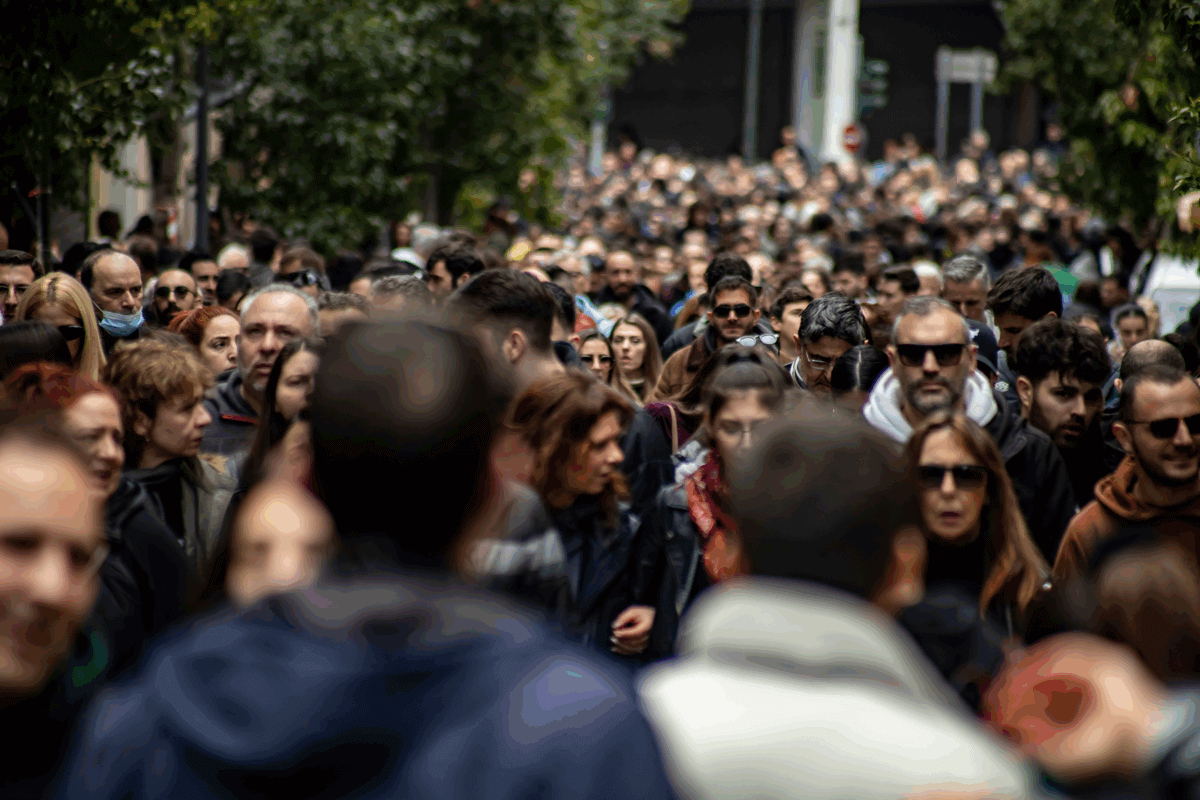
How have climate change, artificial intelligence, the right to marry for same-sex couples and a fragile geopolitical context impacted on the attitudes and opinions of the Greeks? The latest "wave" of the multi-year survey by diaNEOsis.
How did Greece come to having the most expensive housing in Europe, in terms of income? What were the housing policies of the Greek state, how did they change over the years, and what could be done today to overcome the pressing problems?
The study presents proposals for upgrading the financial system and strengthening its capacity to finance the private sector.
What are the views of Greek citizens regarding the economy, the role the state plays in their lives, but also employment and gender issues? Also, how do the Greeks live in 2022?
How have a decade-long financial crisis, a global pandemic and a war in Europe impacted on the attitudes and opinions of the Greeks? The first part of the new “wave” of a major survey by diaNEOsis.
A new study of diaNEOsis reports on the problem of obesity in Greece and proposes a series of actions to address it.
Fay Makantasi and Ilias Valentis are analyzing the state of the Greek economy amid uncertainties in connection with the course of the pandemic and various new sources of risk, such as the energy crisis, the global wave of inflation, and the war in Ukraine.
Why are more and more foreign films and TV series being filmed in Greece? This is the story of a major—and partly wasted—economic opportunity.
A new survey on the views and attitudes of Greeks, concerning the pandemic crisis, vaccinations, and the overall ramifications permeating their everyday life.
A research team coordinated by professor Costas Kartalis from the National and Kapodistrian University of Athens examined the impact of climate change on tourism, agriculture and on urban life in the decades to come.
A new diaNEOsis' study outlines the beliefs of the greek diaspora members in the UK.
How do Greeks live during the second lockdown? How do they handle its second, deadly wave? What do they hope for their future, and how do they feel about the upcoming vaccinations against Covid-19?
Professor of comparative politics, Gerasimos Moschonas, analyzes similarities and differences between major crises of the past and the coronavirus pandemic.
As globalisation retreats and nation-states become more assertive, the international problems asking for solutions proliferate. Geopolitics Professor George Prevelakis analyses the main geopolitical tensions of our times and the way the pandemic will accelerate change.
How did Greeks feel after a month in confinement? How has the pandemic affected our faith in institutions? How many of us "stayed home" and what did we do there? A new survey by diaNEOsis depicts the life, concerns and expectations of Greeks as the gravest crisis of our time is unfolding.
Our country could generate tens of billions of Euros annually attracting retirees, those seeking to combine medical treatment with travel, and vacationers looking for health and wellness options. It is a big market, and an even bigger—currently under-exploited—opportunity.
Emma Marcegaglia, President of BusinessEurope, writes down the 7 key actions that Europe must take, in this chapter for the diaNEOsis book "The Future Of Europe".
The chapter written by the President of the European Round Table of Industrialists (ERT), Benoît Potier, for the diaNEOsis book "The Future Of Europe".
Former President of the EU Parliament and of the Konrad Adenauer foundation, Hans-Gert Pöttering, explores the three difficult but fundamental challenges that Europe must to come to terms with, in this chapter written for the diaNEOsis book "The Future of Europe".
How lowering primary surpluses, taxes and social insurance contributions can lead to higher growth, more employment and a sustainable public debt.
What will the consequences be for the country's agricultural production? How will tourism be affected? How much will the urban environment be impacted, and how grave will the danger for forests and cultural heritage monuments be? What will happen to the coasts? How severe will the impact on beaches or ports be? How will public health be affected? The new diaNEOsis study provides answers.
Anti-europeanism on the rise, institutions in crisis, social conservatism and economic liberalism: Who are the Greeks today? diaNEOsis’ new survey reveals some truths we had suspected, data we had anticipated, and some impressive and unexpected findings.
Why did Greece’s former production model fail? What were its most significant problems? How can we now, after six years of crisis, design a new and viable plan?
One crucial problem of the Greek production model is that the share of innovative industries is much lower than in other EU economies, in stark contrast to the rich scientific potential of the country.
What is the scale of tax evasion in Greece? Who are those evading taxes? And what can be done to fight the problem?
The diaNEOsis survey calculates the percentage of the population living below the extreme poverty line and formulates realistic proposals for solving the problem.
How are Greeks dealing with the refugee crisis? How do they perceive the problem, its scale and its causes?
DiaNEOsis first major survey on Greek values, views and ideas took place in 2015. This essay is an in-depth analysis of the survey's main conclusions.